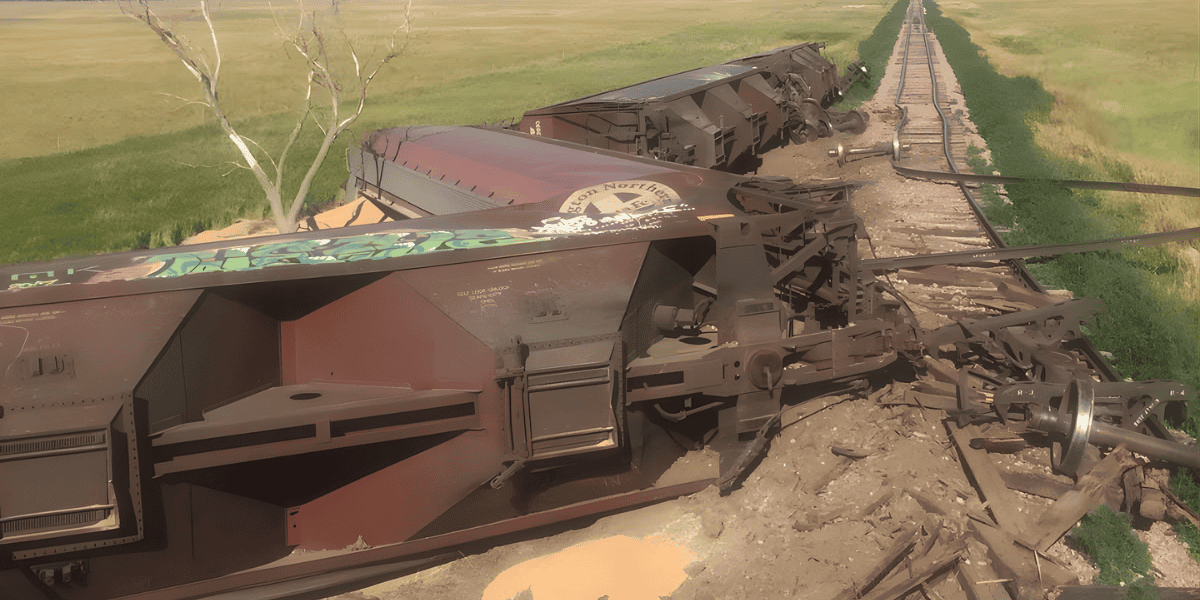
Train derailments rarely make the news unless they’re severe, but they happen far more often than most people think. Many happen at slow speeds inside rail yards and cause limited damage. Others occur on mainline tracks, where higher speeds and heavier loads can turn an incident into a major event.
This blog breaks down how often derailments happen in the United States, why they occur, and what they mean for agricultural and industrial sites.
We Respond to Train Derailments
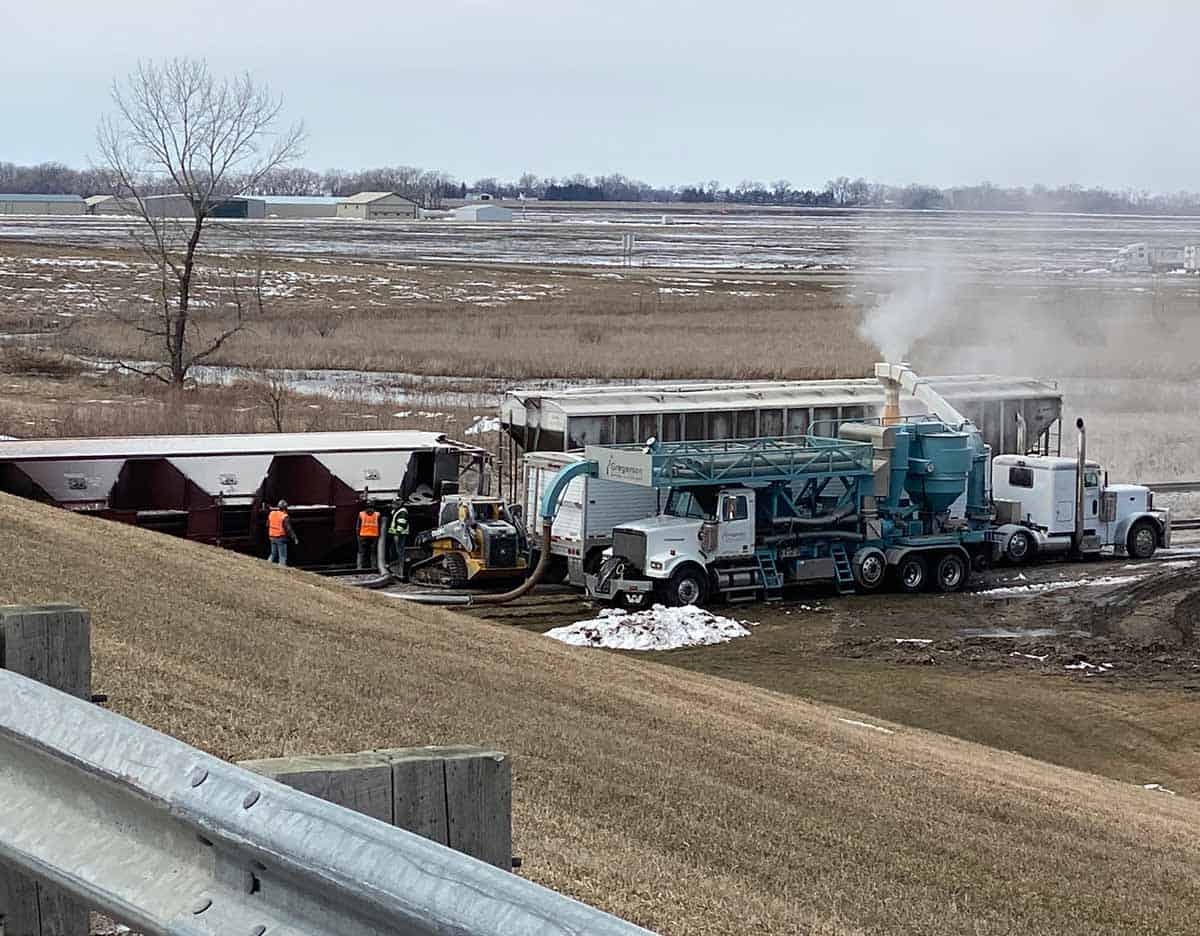
With decades of experience, we work directly with railroad companies, local authorities, and landowners to manage cleanup, transloading, salvage, and disposal after derailments involving bulk commodities and mixed freight.
The long-term average is about 1,000–1,300 derailments per year
That equals roughly 3–4 derailments every day
While derailments were far more common several decades ago, the total has flattened in recent years. Modern rail technology, improved inspections, and upgraded track standards have kept totals relatively stable.
Why the numbers remain high:
FRA requires reporting for all derailments, including minor yard incidents
Rail yards involve high switching activity
Wear and tear on older infrastructure continues to play a role
Freight volumes remain high, especially in agricultural regions
Where Derailments Happen Most
Derailments occur in two main locations: rail yards and mainline tracks. Understanding the difference helps explain why some incidents cause massive damage while others barely make the news.
Rail Yards (Slow-Speed Areas)
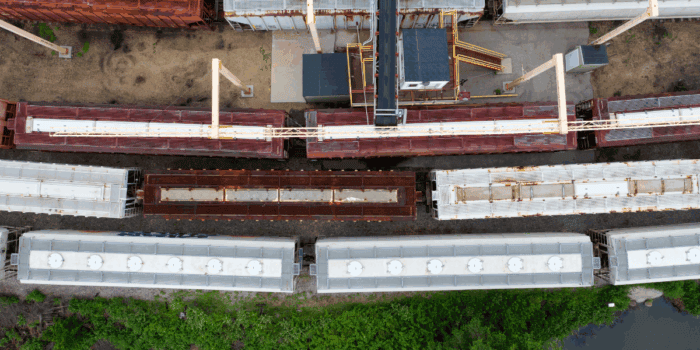
About 74% of derailments occur in rail yards. This is because yards involve:
Frequent switching
Coupling/uncoupling
Tight curves and complex track layouts
Slow-speed maneuvering
Heavy volume of equipment movement
Yard derailments tend to cause less damage because trains are moving slowly.
Mainline Tracks
Only 25–30% of derailments happen on mainline tracks³, but these are often the most severe. Mainline derailments matter because:
Trains move at higher speeds
They carry longer and heavier loads
They transport fuels, chemicals, grain, and industrial materials
Damage spreads farther due to momentum
For agricultural areas, many mainline corridors run directly through grain production zones, increasing potential impact.
Why Train Derailments Happen
The Federal Railroad Administration groups derailment causes into several categories. Below are the most common.
Track Problems
Track issues remain one of the leading causes, especially on mainlines where speed makes defects more dangerous.
Common problems include:
Broken rails
Misaligned track
Worn joints
Ballast failure
Washed-out track from flooding or heavy rain
These issues worsen during extreme temperature swings, freeze–thaw cycles, and prolonged heat.
Equipment Failure
Mechanical issues account for a significant number of derailments, including:
Wheel failures
Bearing failures
Axle defects
Brake malfunctions
A single component failure can lead to a major derailment, especially under load.
Human Factors
These are more common in rail yards and switching zones:
Switching mistakes
Speed violations
Miscommunication between crews
Operational errors
Environmental Conditions
Weather plays a direct role in track stability:
Flooding and washouts
Extreme heat causing rail expansion
Ice buildup on track components
Soil saturation near track beds
How Often Derailments Involve Hazardous Materials
While derailments are common, hazardous material releases are not.
Based on FRA hazmat data:
Only a small percentage of derailments involve hazardous materials⁴
Typically 10–20 derailments per year result in a hazmat release⁴
Releases occur more often in mainline derailments than yard derailments
Hazardous materials include:
Fuels
Fertilizers
Industrial chemicals
Petroleum products
Cleaning agents
Agricultural inputs
Even when no hazmat is released, the presence of these materials still increases risk for nearby farms and facilities.
Why Train Derailments Matter for Farms and Grain Facilities
Agricultural operations are especially exposed to derailment risks because many facilities sit next to high-volume rail corridors.
Trains routinely carry:
Grain and feed
Fuel and propane
Fertilizer
Chemicals for food processing
Cleaning and sanitation chemicals
Agricultural machinery
Dry bulk commodities
A derailment near a farm or facility can cause:
Grain contamination, requiring immediate salvage
Damage to silos, bins, conveyors, and loadout systems
Structural compromise from vibration or track upheaval
Chemical or fuel exposure
Spoiled product that must be removed
Extended operational downtime
Insurance claims and inspections that delay production
This is why derailments, even when infrequent at any one location, must be included in risk and safety planning.
With 3-4 derailments occurring every day² across the U.S., derailments are a routine part of national rail operations. Most are small. But all it takes is one derailment near a farm, grain operation, or industrial site to cause major disruption.
Facilities should stay aware of:
What materials pass through nearby rail lines
Whether their local line is yard, siding, or mainline
How close their bins or buildings are to the track
How quickly local responders can mobilize
Whether their EAP covers derailment and contamination scenarios
Conclusion
Train derailments happen more often than most people realize. The U.S. sees more than 1,000 derailments per year, and while most are minor, mainline incidents can cause substantial damage, contamination, and operational downtime.
With the right planning and a trusted response partner, you can protect your people, product, and property. West Side Salvage is here to help with preparedness, cleanup, and emergency response.