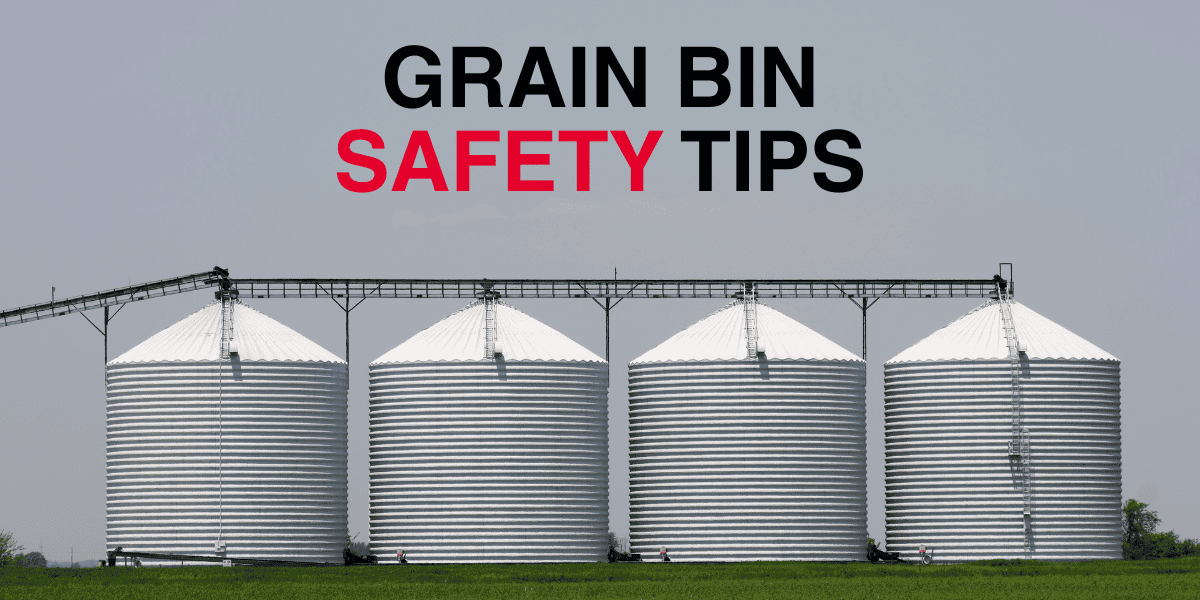
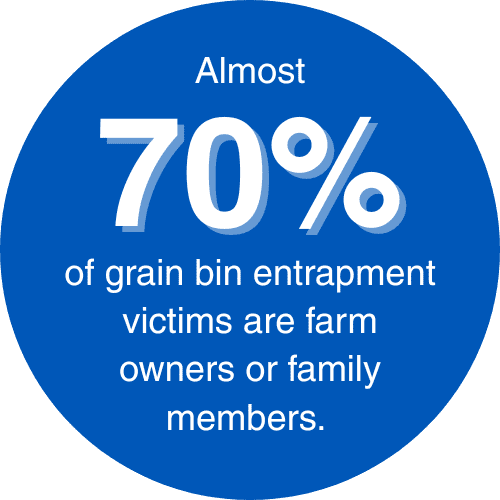
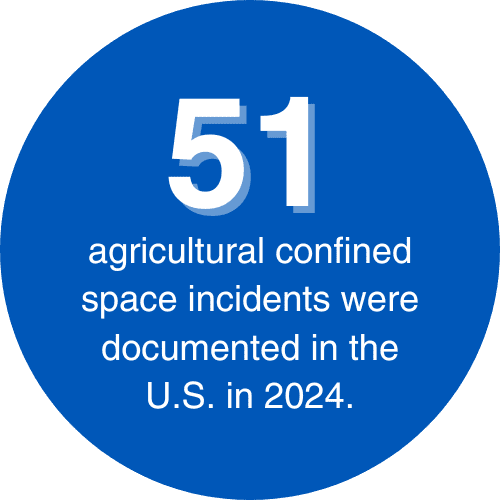
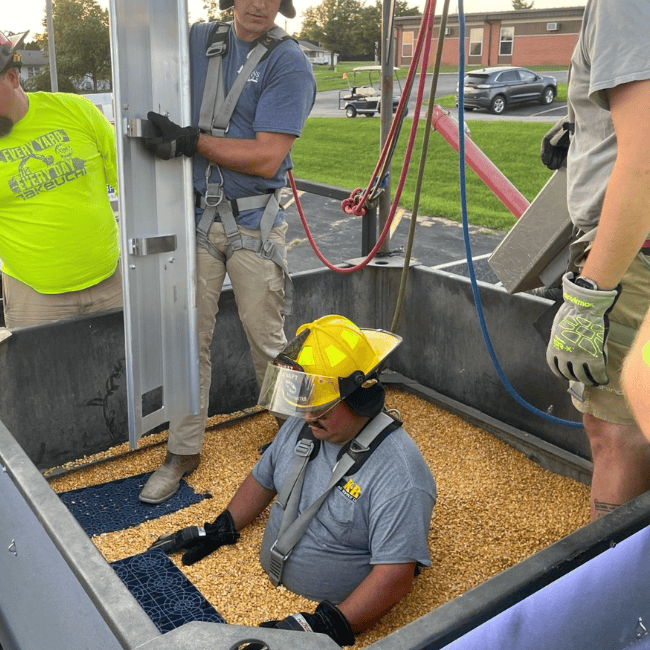
Grain bin safety is one of the most critical risk areas on any farm. It is also one of the most preventable.
Most grain bin accidents happen during routine work, not emergencies. This guide breaks down the rules, hazards, and real-world processes that define effective safety with grain bins.
What is Grain Bin Safety?
Grain bin safety refers to the procedures, equipment, and decision-making used to prevent injury or death when working in or around grain bins.
Effective safety focuses on preventing:
Grain entrapment and engulfment
Equipment-related injuries
Oxygen deficiency and toxic exposure
Structural hazards
Why It Matters
Most grain bin incidents follow a predictable pattern:
Grain condition problem
Worker enters to fix it
Safety steps skipped
Entrapment or injury occurs
The Top 3 Rules of Grain Bin Safety
If you follow these every time, you eliminate the majority of risk:
Never enter a grain bin alone
Lock out all grain-moving equipment
Avoid entering bins with unstable grain
✓RULE #1
Never Enter a Grain Bin Alone
Grain can behave like a liquid. Once you’re trapped, self-rescue is nearly impossible.
Grain bin best practices:
One trained observer outside the bin
Observer has no other responsibilities
Constant communication maintained
Emergency plan ready before entry
Real Risk: In grain bin incidents, delayed response is often what turns a survivable situation into a fatal one.
✓RULE #2
Lock Out Equipment Before Entry
Lockout/tagout is one of the most important grain bin safety procedures. Flowing grain is what causes engulfment. Equipment creates that flow.
Before entering a grain bin:
Shut down augers and conveyors
Disconnect power sources
Apply lockout/tagout
Test to confirm zero movement
Verify no remote startup
Where grain bin safety fails:
Equipment restarted unknowingly
Residual grain flow continues
Automated systems reactivate
Why This Matters: If grain moves, grain bin safety is compromised immediately.
✓RULE #3
Stay Out of Unstable Grain
Unstable grain is one of the biggest hidden dangers in grain bin safety.
Key Grain Bin Definitions:
Bridging– Grain forms a false surface with empty space underneath.
Crusting– Hardened grain sticks to walls and can collapse
Safe approach:
Never walk on grain to break it loose
Probe from outside using a pole
If conditions look unstable, stay out
Important to Remember: If grain condition is unknown or unstable, do not enter.
Grain Bin Safety Decision Framework
Use this before every entry:
Grain Condition
Grain Bin Safety Risk
Action
Dry, flowing grain
Low
Follow full safety protocol
Minor clumping
Moderate
Use external tools first
Bridging or crusting
High
Do not enter
Active grain flow
Extreme
No entry under any condition
Common Grain Bin Hazards
Bridged grain can collapse beneath you, leading to sudden entrapment.
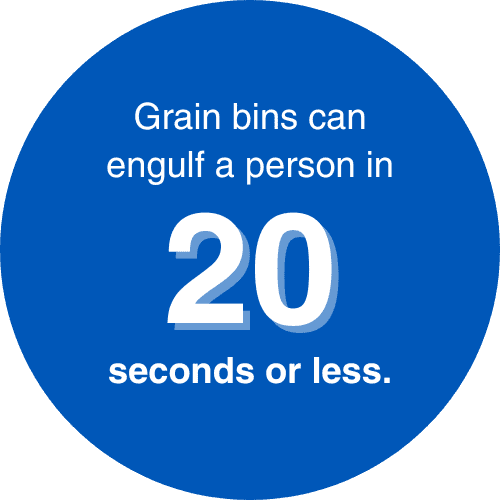
Flowing grain acts like quicksand and can pull you under in seconds.
Moving machinery can cause entanglement or injury if not properly locked out.
Toxic gases like carbon dioxide or mold spores can cause suffocation or unconsciousness.
Structural failures, such as wall collapse or roof damage, can trap or injure workers.
Don’t Wait for a Close Call
Most farms don’t think about emergency planning until it’s too late. Start your Emergency Action Plan with help from the team that knows bin safety inside and out.
“Many of the ways to increase safety when working and living around grain storage involve basic safety practices, but more education and enforcement is needed on the farm.” – Kristina TeBockhorst, Iowa State University Extension and Outreach
Grain bin safety does not stop at prevention. It requires planning for response.
Minimum Grain Bin Emergency Safety Plan
Rescue procedures
Emergency contacts
Equipment access
First responder coordination
West Side Salvage helps farms develop Emergency Action Plans that improve response time and reduce risk during grain bin incidents.