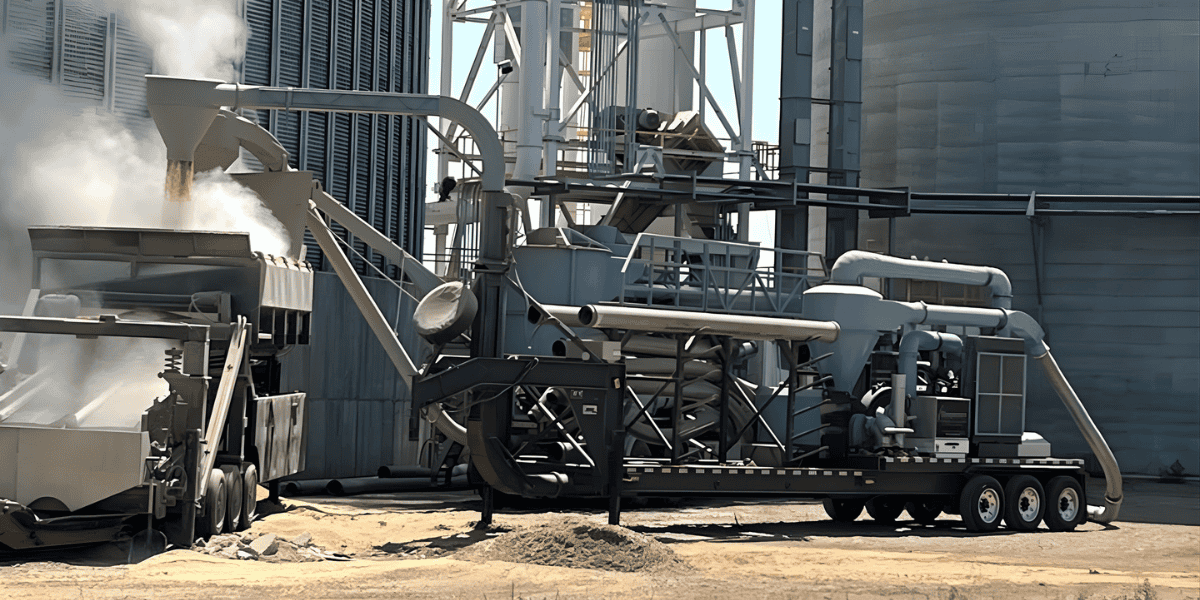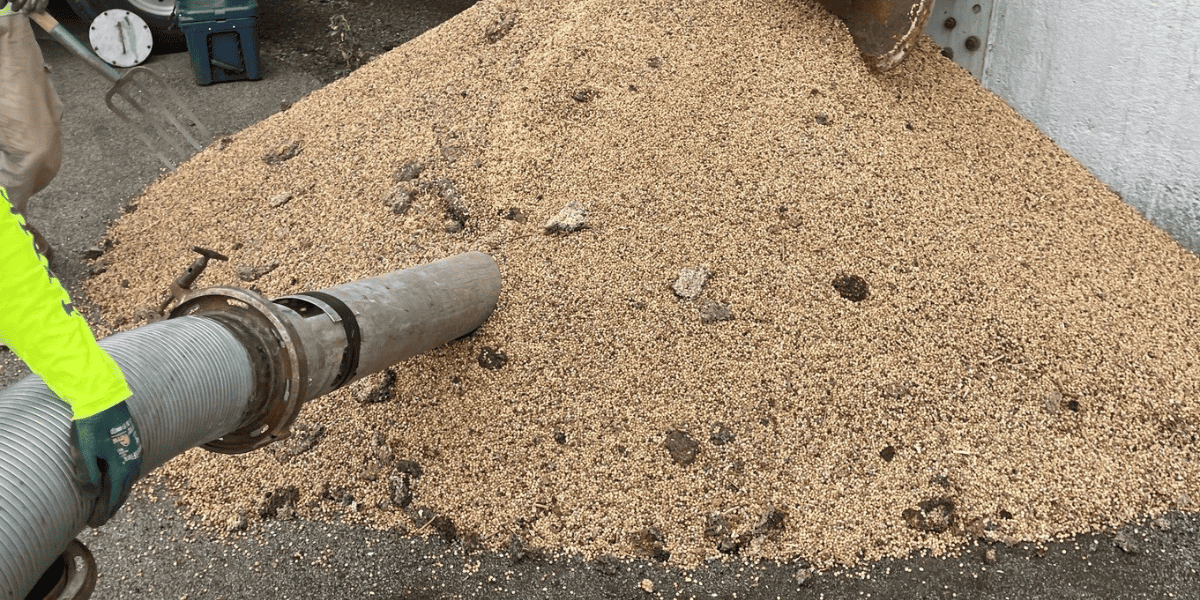
A grain vac (grain vacuum) is a pneumatic conveyor that uses airflow to pull grain through a hose, separate it from the air, and blow it into a truck, trailer, or another bin. Because the operator works from outside, a grain vac can empty bins, silos, and railcars without anyone entering the grain.
That matters because grain entrapment is the most common agricultural confined space emergency in the U.S., and every entrapment starts with a person inside the grain. A vac removes that step, as long as the grain will flow to the nozzle.
In short
- A grain vac moves free-flowing grain with air. It does not make stuck grain flow.
- Its main jobs are grain bin cleaning, transfer, and salvage, all without bin entry.
- Real-world capacity is usually well below the rated bushels per hour.
- Rent for dry, free-flowing grain and an experienced operator. Hire a crew for caked, bridged, or heating grain, or a hard deadline.
How Does a Grain Vac Work?
A grain vac turns airflow into a conveyor. Every unit, whatever the brand or size, uses the same four parts in sequence:
- Blower. Driven by a tractor PTO or an onboard diesel engine, it creates the airflow that does all the work.
- Intake hose. The operator buries the nozzle in the grain, and air rushing into the hose carries grain with it.
- Separator and airlock. A cyclone slows the air so the grain drops out. A rotary airlock then meters the grain into the discharge line while the air moves on to a filter.
- Discharge hose. The same airflow pushes the grain out into a truck, a trailer, or another bin.
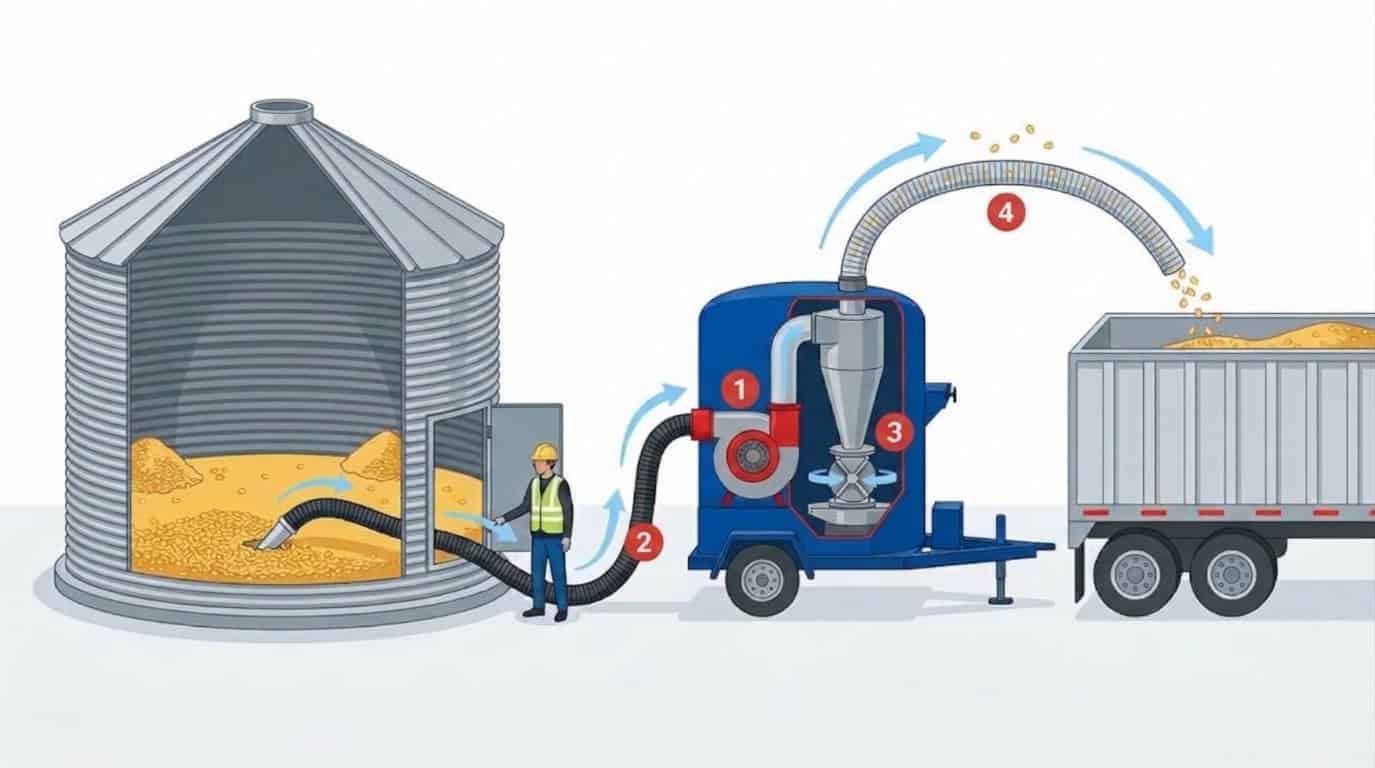
Because the grain rides on air, the path can bend. Hoses run through a bin door, around obstructions, and up to hoppers an auger could never reach.
Takeaway: A grain vac is an air pump with a separator. Nothing mechanical touches the grain until it reaches the airlock, which is why a vac can go where augers cannot.
What Is a Grain Vac Used For?
Grain vacs are used wherever free-flowing grain has to come out of a place with no working unload system:
- Grain bin cleaning and cleanout. The grain left below the sweep auger and against the wall comes out from the door, so nobody climbs in.
- Transfer. Bin to bin, bin to truck, or out of flat storage with no unload system.
- Salvage after a fire, flood, or collapse. Out-of-condition grain has to come out fast and go somewhere specific. A vac moves it on the insurer’s timeline, not the bin’s. See grain salvage.
- Silos and tanks. Concrete silos and steel tanks with failed or inaccessible unload systems.
- Railcars and trailers. Hopper cars, derailed cars, and trailers that cannot be tipped.
- Before repair or demolition. Emptying a structure before welders or a demolition crew arrive.

Takeaway: If the job is moving free-flowing grain from a place with no unload system to a place that needs it, a vac is usually the right tool.
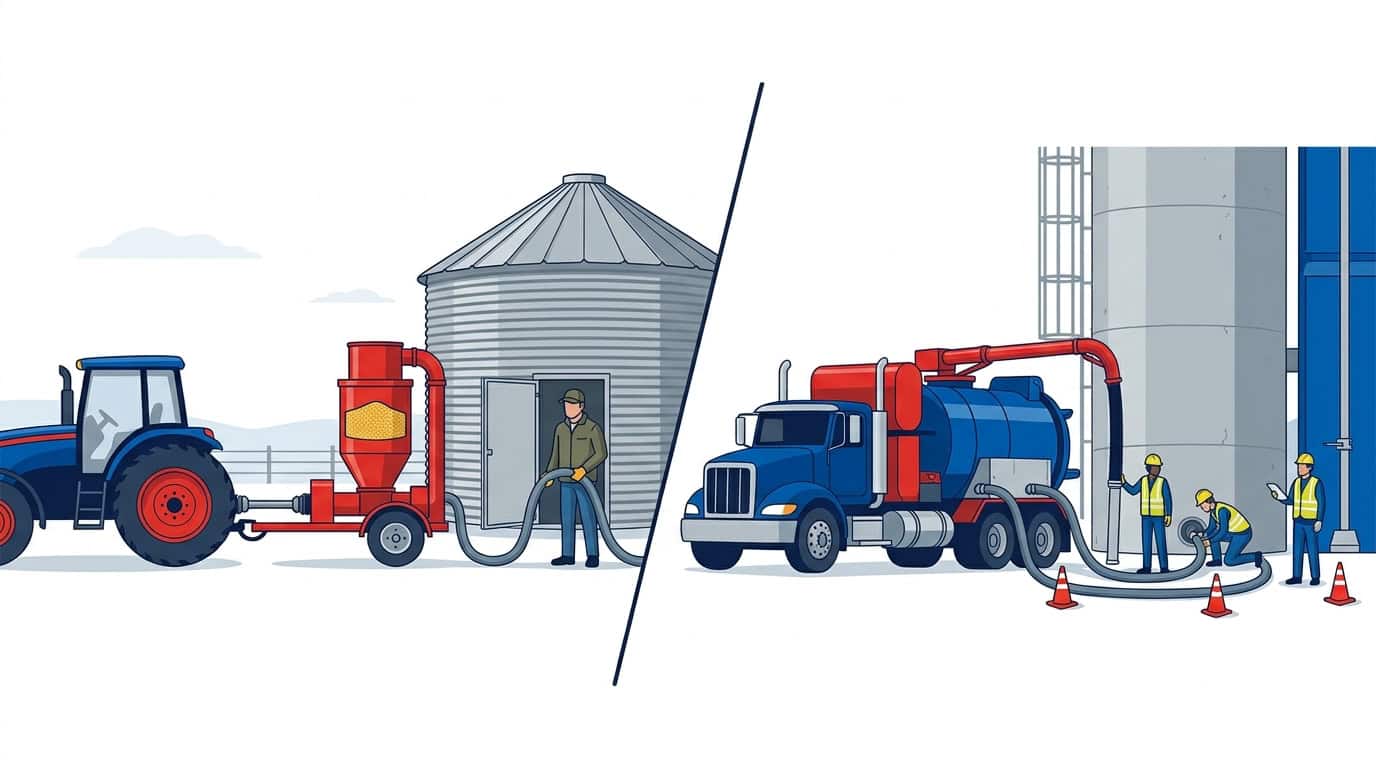
Types of Grain Vacs: PTO vs. Self-Powered
Grain vacs come in two types, based on how the blower is powered: PTO-driven units that run off a tractor, and self-powered units with their own diesel engine.
| PTO-driven | Self-powered | |
|---|---|---|
| Power | Tractor PTO | Onboard diesel engine |
| Mounting | Trailer | Truck or trailer |
| Capacity | Lower | Higher |
| Cost | Lower, and simpler to run | Higher |
| Tractor | Ties one up, with the PTO horsepower the spec sheet states | None needed |
| Best for | Occasional farm use | Commercial crews moving serious volume |
The brands you will see most in North America are Walinga, Brandt, the REM GrainVac line (now made by AGI), and Handlair. They differ in capacity, hose diameter, filtration, and how gently they handle fragile grain, but all use the same four-part design. For most operations the better question is not which brand, but which size, and whether owning one makes sense at all.
Takeaway: PTO units suit occasional farm use. Self-powered units move serious volume. Size and grain condition matter more than brand.
How Fast Does a Grain Vac Move Grain?
Manufacturers rate grain vacs from a few hundred bushels per hour for small PTO units to several thousand for large self-powered machines. Treat that rating as a ceiling measured under ideal conditions. Four factors decide the rate you actually get:
| Factor | What it does | How to protect capacity |
|---|---|---|
| Hose length and diameter | Every extra section and bend adds friction the blower has to overcome | Use the shortest, straightest run and the widest hose the unit allows |
| Lift height | Pushing grain upward costs more capacity than anything else | Keep the discharge as low as the job allows |
| Grain condition | Wet, fines-heavy, or frozen grain slows the airlock and plugs hoses | Plan extra time and expect stops |
| Operator skill | A nozzle in open air moves nothing; a choked nozzle plugs the hose | Keep the nozzle buried and manage the air bleed |
Takeaway: Plan the job on the realistic rate, not the brochure rate. Hose setup, lift, grain condition, and the operator can each pull throughput well below the rating.
What a Grain Vac Can’t Do
A grain vac moves grain that flows to the nozzle. It cannot make grain flow, and that one limit explains most of the frustration people have with them.
- Clear bridged or crusted grain. A crust over a void, or a column stuck to the wall, will not come to the hose. It has to be broken down first, from outside the bin. That is a bin whip job, with the vac following behind.
- Move wet or moldy grain quickly. Heavy, sticky material clogs hoses and the airlock. It can still be moved, but slowly and with frequent stops.
- Handle fragile seed without loss. Peas, edible beans, and very dry soybeans can crack in the airlock. Lower the air speed, keep the hose fed, and expect some damage.
- Clean or grade the grain. Dust and fines go to the filter, but insects, foreign material, and damaged kernels go out the discharge with everything else.
- Run dust-free. Air and grain together make dust. The exhaust needs its filter, the unit needs grounding, and nobody should run a vac in a bin that has not been checked for heating or smoldering.
For the different ways grain gets stuck and what each one needs, see silo blockages, clogging, and how to address them.
Takeaway: A vac is the second tool, not the first, whenever grain is caked, bridged, or hung up. Break it loose from outside, then vacuum it out.
How to Clean a Grain Bin With a Grain Vac
Grain bin cleaning with a vac follows a set order that keeps people outside and the machine from plugging:
- Check the bin first. Look for heating, smoldering, crusting, and a hung-up column. If the grain is not free-flowing, the vac is not the first tool.
- Lock out the augers and sweep. Power off, locked, and tagged before anyone works near the floor, even from the door.
- Set up the shortest, straightest hose run you can. Every bend and every foot costs capacity.
- Ground the unit and check the filter. You are about to make a dust cloud on purpose.
- Start the blower, then bury the nozzle. Keep it fed, and use the air bleed to balance airflow against grain.
- Work from the door and the hatch. Pole extensions and hose handling tools exist so that nobody enters.
- If the hose plugs or the grain stops coming, stop. Clear the plug from outside. If the grain will not flow to the nozzle, that is a bin whip job. It is never a reason to climb in.

Takeaway: Inspect, lock out, ground, keep the nozzle fed, and treat a stuck nozzle as a reason to stop, never a reason to enter.
Is a Grain Vac Safer Than Entering the Bin?
Yes, as long as nobody enters. The main safety case for a grain vac is that it keeps people out of the grain, which is where the worst risk is. OSHA warns that moving grain can bury a worker in seconds, and a crust can collapse under the first step.
Purdue University documented no fewer than 21 grain entrapments in the U.S. in 2025, and 28.6% of them were fatal. For commercial grain facilities, OSHA’s grain handling standard (29 CFR 1910.272) requires precautions such as entry permits, equipment lockout, lifelines, and an observer before anyone goes in. Every cleanout done from outside is an entry that never happens.
The hazards that remain sit outside the bin: the dust cloud the vac creates, the PTO shaft, and the augers near the floor. Grounding, filtration, shielding, and lockout handle all three. For more on why entrapments keep happening, see our guide to grain entrapment statistics, causes, and prevention.
Takeaway: A vac is only safer than entering if nobody enters. The hazards that remain are all managed from outside.
Should You Rent, Buy, or Hire a Crew?
It depends on how often you need a vac and what condition the grain is in.
| Option | Best when | Keep in mind |
|---|---|---|
| Rent | The job is occasional, the grain is dry and free-flowing, and you have an experienced operator and a tractor with enough PTO horsepower | A grain vac rental is the cheapest way to learn whether you would use one often enough to own |
| Buy | You move grain this way every season, across several bins | Storage and upkeep add up. A used grain vac is a sensible first purchase if the airlock and hoses were cared for |
| Hire a crew | The grain is caked, bridged, heating, or out of condition; the structure is tall or unusual; an insurance claim needs documentation; or the bin must be empty by a date | A crew brings the bin whip and the vac together, plus the experience to keep everyone outside |
If you are planning for someone to go in at any point, you are already past what a rental solves.
Takeaway: Free-flowing grain and a skilled operator: rent. Stuck grain, a deadline, or a claim: hire the crew that owns the whole toolkit.
Grain Vac FAQs
A grain vac, or grain vacuum, is a pneumatic conveyor that moves grain with airflow through hoses, using a blower, a cyclone separator, and a rotary airlock. It lets grain be removed from bins, silos, flat storage, and railcars without anyone entering the structure.
A blower creates airflow. Air rushing into the intake hose carries grain to a cyclone separator, where the grain drops out of the air. A rotary airlock meters the grain into the discharge line, and the same airflow blows it into a truck, trailer, or bin while the air passes through a filter.
Not on its own. A grain vac only moves grain that flows to the nozzle. A crust or hung-up column has to be broken down first from outside the bin, usually with a bin whip, and the vac then removes what falls.
Rated capacity runs from a few hundred bushels per hour for small PTO units to several thousand for large self-powered machines. Real-world rates are usually well below the rating, because hose length, lift height, grain condition, and operator skill all cut throughput.
The most common grain vac brands in North America are Walinga, Brandt, the REM GrainVac line made by AGI, and Handlair. All use the same blower, separator, and airlock design. They differ in capacity, hose size, filtration, and how gently they handle fragile grain.
No. A grain vac moves grain; it does not grade or clean it. Dust and fines are separated at the filter, but insects, foreign material, and damaged kernels pass through to the discharge with the rest of the grain.
It can. Fragile seed such as peas, edible beans, and very dry soybeans can split in the airlock. Running at a lower air speed and keeping the hose consistently fed reduces damage, but some loss should be expected with delicate crops.
Yes, as long as nobody enters. It removes the most dangerous step in grain bin cleaning. The hazards that remain, which are dust, the PTO shaft, and the augers, are all managed from outside the structure.
Rent when the grain is dry and free-flowing and you have an experienced operator. Hire a crew when the grain is caked, bridged, heating, or out of condition, when the structure is tall or unusual, when an insurance claim needs documentation, or when the bin must be empty by a deadline.
The Bottom Line
A grain vac is a simple machine doing an important job: moving grain so people do not have to climb in after it. Plan on the realistic rate, respect what it cannot do, and never let a stuck nozzle turn into a bin entry. For routine cleanouts of free-flowing grain, a rental and a good operator will serve you well. For anything harder, a professional grain bin cleaning crew is the faster and safer call.
References
- OSHA. Standard 1910.272, Grain Handling Facilities. https://www.osha.gov/laws-regs/regulations/standardnumber/1910/1910.272
- OSHA. Grain Handling. https://www.osha.gov/grain-handling
- Cheng, Y., Field, B., Price, J. E., Ambrose, K., Sheldon, E., and Haslett, N. 2025 Summary of U.S. Agricultural Confined Space-related Injuries and Fatalities. Purdue Agricultural Safety and Health Program, 2026. https://www.purdue.edu/engineering/abe/agconfinespaces/wp-content/uploads/2026/07/2025-Summary-of-Confined-Spaces.pdf