Understanding the different types of silos used on modern farms is critical for safe grain storage, operational efficiency, and long-term planning.
Not all storage systems are built for the same purpose. Grain bins, tower silos, bunker systems, and grain bags are designed for different materials, handling methods, and storage conditions.
Choosing the wrong structure or misunderstanding how it works can increase the risk of:
Grain spoilage
Structural failures
Worker safety incidents
Costly repairs or salvage operations
This blog explains the major types of agricultural storage systems and when each one is typically used.
Why Silo Types Matter
Farm storage structures are not interchangeable. Each type affects how grain or feed behaves during storage, handling, and unloading.
The storage structure you choose impacts:
Grain quality: Moisture control and airflow vary widely by structure
Spoilage risk: Some systems are better suited for long-term storage than others
Worker safety: Different unloading systems create different hazards
Maintenance requirements: Lifespan and inspection needs vary significantly
Failure response:Collapse or blockage events are handled differently depending on the structure
Why This Matters: Many storage incidents occur when a structure is used outside its intended purpose.
The Four Primary Types of Farm Silos
Most farms use one or more of the following storage systems.
Storage Type
Primary Use
Typical Material
Storage Orientation
Grain Bins
Dry grain storage
Corrugated steel
Vertical
Concrete Silos
Silage and fermented feed
Concrete or concrete staves
Vertical
Bunker Silos
Silage and feed
Reinforced concrete
Horizontal
Bag Silos
Temporary grain storage
Plastic tubing
Ground-level
Each structure solves a different storage problem.
1. Grain Bins (Metal Silos)
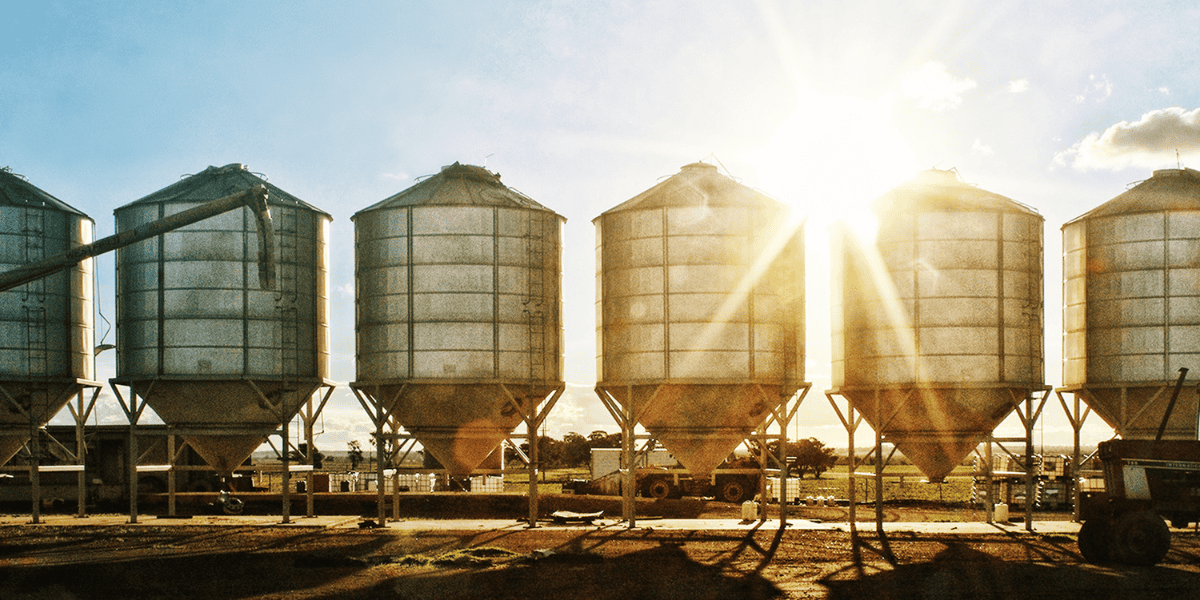
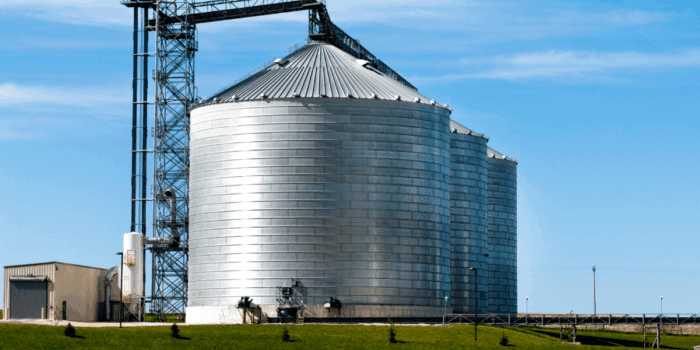
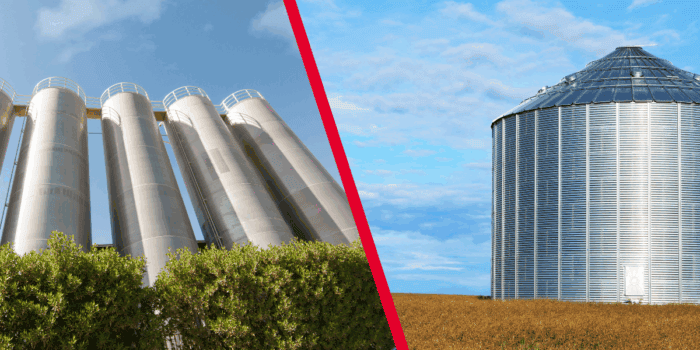
Grain bins are the most common grain storage structure in the United States. They are designed specifically for storing dry row crops such as corn, soybeans, and wheat. Grain bins are typically made from corrugated galvanized steel panels and installed on a concrete foundation.
Common Uses
Corn
Soybeans
Wheat
Other dry grains
Key Design Features
Aeration floors and fans
Temperature monitoring systems
Mechanical unload systems
Flat-bottom or hopper-bottom configurations
Advantages
Cost-effective storage per bushel
Easy to expand with additional bins
Compatible with modern grain drying systems
Efficient for mechanical loading and unloading
Limitations
Steel can corrode over time
Structural failures may occur if foundations shift
Unloading hazards such as grain bridging and crusting
Important Safety Note: Grain bins carry a higher risk of grain entrapment incidents because of mechanical unloading systems.
2. Concrete Silos (Tower Silos)
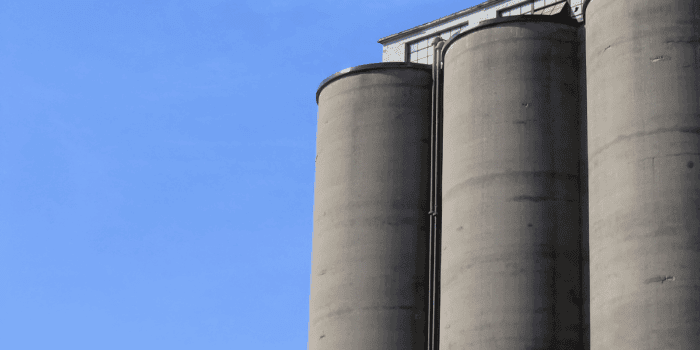
Concrete tower silos are tall vertical structures commonly found on dairy and livestock farms. These silos are designed for storing silage, which is fermented high-moisture feed used for cattle and livestock.
Construction Types
Poured concrete
Concrete stave with metal banding
Key Design Characteristics
Tall, narrow vertical design
Fermentation-friendly environment
Chute systems or bottom unloaders
Advantages
Extremely durable structures
Stable internal temperatures
Long operational lifespan when maintained
Limitations
Repairs can be expensive
Poor compatibility with modern grain handling
Removal or demolition is complex
Many tower silos on older farms remain standing even after they are no longer actively used.
3. Bunker Silos
Bunker silos are horizontal storage systems used primarily for silage. Instead of storing material vertically, bunker systems store feed in large horizontal piles between concrete walls.
Typical Uses
Silage
Corn silage
Fermented livestock feed
Key Design Features
Reinforced concrete side walls
Open top
Packed tightly with tractors or loaders
Covered with plastic sheeting
Advantages
Lower construction cost than tower silos
Easy access for feeding operations
Scales well for large livestock operations
Limitations
Spoilage risk along exposed surfaces
Requires careful covering and compaction
Not designed for dry grain storage
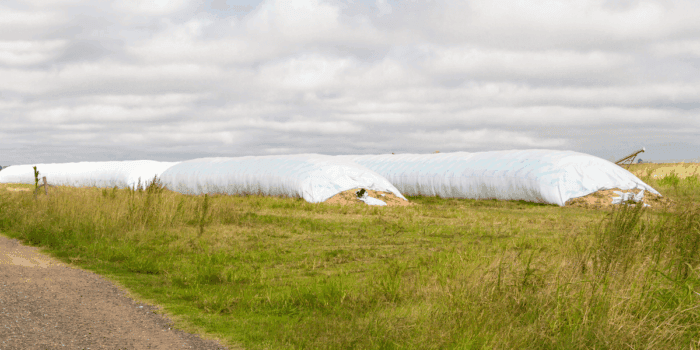
4. Bag Silos (Grain Bags)
Grain bags provide temporary or supplemental grain storage. These systems use long plastic tubes filled with grain using a specialized bagging machine.
Common Uses
Overflow storage during large harvests
Temporary grain storage
Emergency storage when bins are full
Advantages
Fast to deploy
Low upfront cost
Flexible location on the farm
Limitations
Short storage lifespan
Vulnerable to wildlife or punctures
Requires regular monitoring to prevent spoilage
Grain bags are widely used during high-yield seasons when permanent storage capacity is exceeded.
Silos vs. Grain Bins
Many people use the word “silo” to describe any farm storage structure. In reality, grain bins and silos serve different purposes.
Grain Bins
Grain bins are designed specifically for dry grain storage.
Typical Features
Corrugated steel walls
Aeration systems
Mechanical unload equipment
Temperature monitoring
They are common on row-crop farms focused on corn and soybeans.
Silos
Traditional silos are primarily used for silage and fermented feed.
Typical Features
Concrete or stave construction
Tall vertical design
Gravity or mechanical feed removal
They are more common on dairy and livestock operations.
Quick Comparison
Feature
Grain Bins
Silos
Primary Storage
Dry grain
Silage / fermented feed
Construction
Steel
Concrete
Unloading
Mechanical systems
Gravity or lonloaders
Common Farms
Row-crop operations
Dairy and livestock
Conclusion
Grain bins, tower silos, bunker systems, and grain bags each play a different role in agricultural storage. Understanding how these structures function helps farm operators make better decisions about inspections, upgrades, and storage strategy.
Many storage failures show warning signs long before a major incident occurs. Recognizing those warning signs early can prevent grain loss, structural damage, and costly downtime.
When problems do occur, the response depends heavily on the structure involved. Salvaging a damaged grain bin requires a very different approach than stabilizing a bunker silo or managing a failing concrete tower.
West Side Salvage specializes in grain storage emergencies, structural failures, and controlled grain recovery across all major silo types. Involving experienced professionals early can improve safety, reduce product loss, and minimize disruption to farm operations.