When grain cakes to the walls, bridges over an outlet, or spoils in the bottom of a bin, someone has to get it out. The wrong way is to send a worker inside to dig it loose by hand, which is how the deadliest accidents in agriculture happen. The right way is grain bin cleaning with a grain vacuum: a machine that pulls grain out of the bin using suction and air, so the work gets done from outside the danger zone.
Below, we break down how professional grain bin and silo cleaning works, what a grain vacuum is and how it does the job, and why this work is best left to trained crews.
Grain bin cleaning is the process of removing leftover, caked, spoiled, or out-of-condition grain from a bin or silo so it can be safely reused, inspected, or refilled.
Done right, it clears the walls, floor, and outlet of buildup that:
Blocks grain flow
Harbors pests and mold
Creates fire and explosion risk
The fastest, safest way to do it is with a grain vacuum, which lifts grain out through a hose instead of sending a person in with a shovel.
Takeaway: Grain bin cleaning removes leftover and out-of-condition grain, and a grain vacuum does it safely from outside the structure.
What Is a Grain Vacuum?
A grain vacuum, or grain vac, is an industrial machine that uses suction to lift grain and move it through a hose.
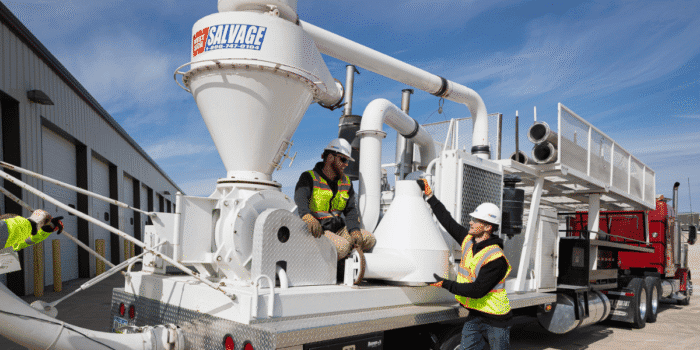
It works like a household vacuum, but on a far larger scale. A high-capacity blower pulls grain and air up a hose, separates the grain in a cyclone tank, filters out dust, and discharges clean grain into a truck or bin.
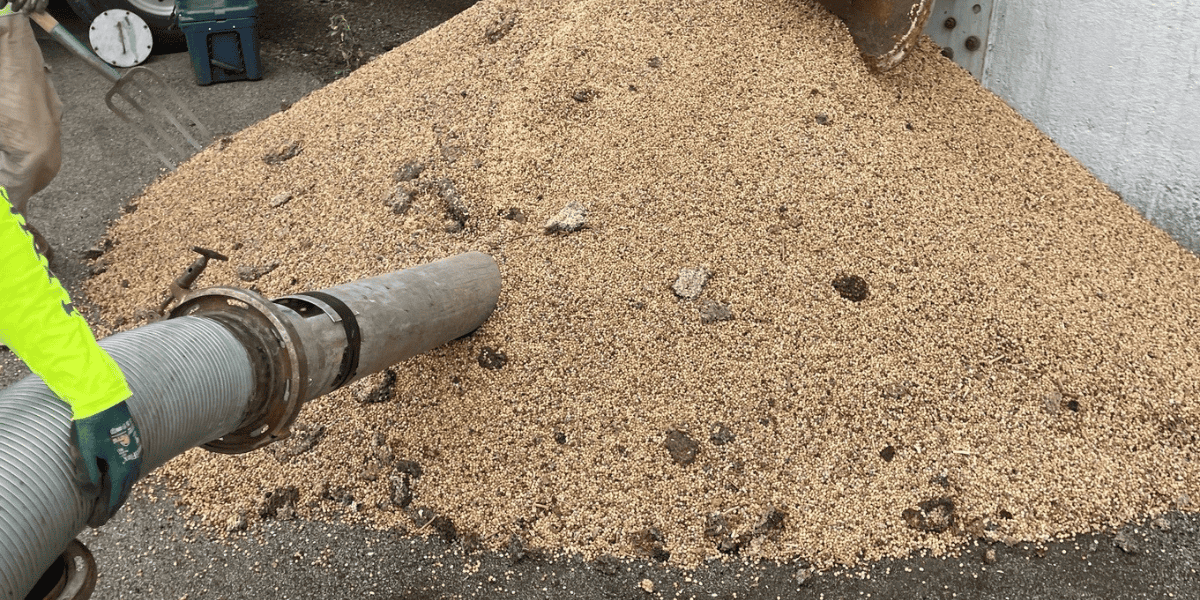
For bin cleaning, that design is exactly what you want. The vacuum reaches grain stuck in corners, under floors, and against walls, and removes spoiled material without anyone climbing inside.
Takeaway: A grain vacuum moves grain using suction and air, making it the core tool for cleaning out bins and silos.
How a Grain Vacuum Cleans Out a Bin
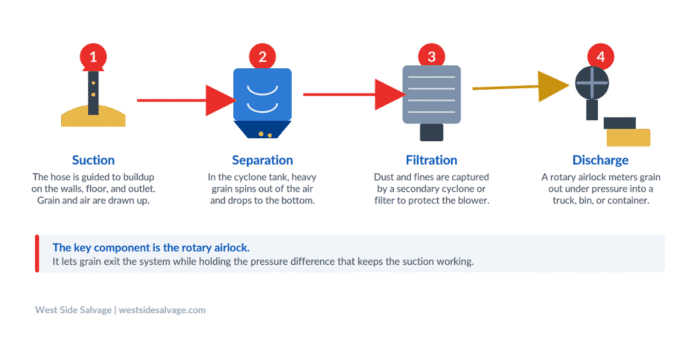
Every grain vacuum follows the same four-stage process, from small farm units to truck-mounted industrial systems.
Step 1: Suction
The blower creates negative pressure that draws grain and air up the intake hose. An operator guides the hose to buildup along the walls, floor, and outlet.
Step 2: Separation
Inside the cyclone tank, the heavier grain spins outward and falls to the bottom while the lighter air continues on.
Step 3: Filtration
Dust, fines, and debris are pulled into a secondary cyclone or filter, protecting the blower from wear.
Step 4: Discharge
A rotary airlock meters the grain out under pressure into a waiting truck or bin, without breaking the suction.
Takeaway: The rotary airlock is what makes continuous cleaning possible. It releases grain without breaking the suction that pulls the next load in.
What Grain Bin Cleaning Handles
Professional bin and silo cleaning covers far more than an end-of-season sweep-out. A grain vacuum lets a crew handle:
Routine cleanout between crops or storage cycles
Caked buildup on walls and outlets that blocks flow and cuts capacity
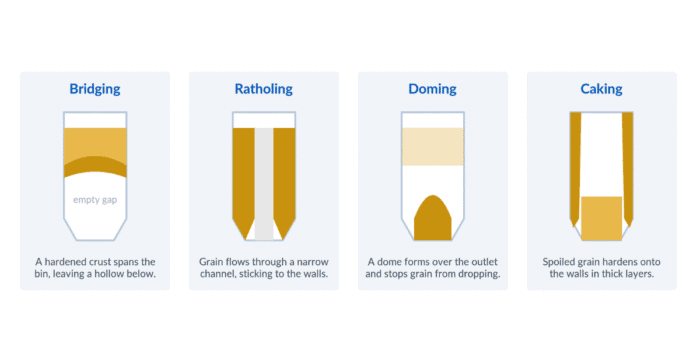
Blockages like bridging, ratholing, and doming
Out-of-condition grain that has spoiled, crusted, or overheated
Spilled grain recovery from the ground, rail yards, or equipment
Pre-inspection and pre-repair cleanout so a structure can be safely entered
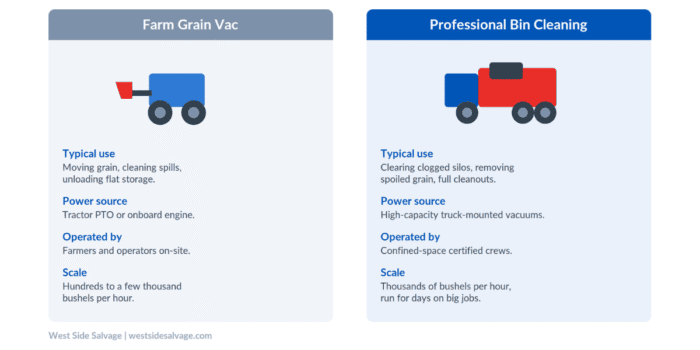
The machine a farmer uses to move grain between bins runs on the same principle as a professional crew’s equipment, but the scale and application are very different.
At a Glance: Farm Grain Vac vs. Industrial Grain Vacuum
Factor
Farm Grain Vacuum
Industrial Grain Vacuum
Typical use
Moving grain between bins, cleaning up spills, unloading flat storage
Thousands of bushels per hour, often run for days on large jobs
Professional cleaning is built for the demanding jobs: unplugging a silo, stripping caked walls, or clearing thousands of bushels of spoiled grain. That work carries confined-space and structural risks that call for certified crews.
Takeaway: Both use suction and air, but professional bin cleaning handles the clogged, spoiled, or unsafe structures that need specialized crews.
Why Grain Bin Cleaning Is a Job for Professionals
The biggest reason to hire out bin cleaning is safety.
When grain bridges or cakes, the temptation is to climb in and break it loose by hand. That is exactly what leads to grain entrapment, which Purdue University identifies as the leading cause of agricultural confined-space deaths.
The numbers show why manual entry is so dangerous:
15 to 20 grain entrapments are reported in the United States each year, according to OSHA.
About 36 percent of reported cases end in a fatality, sometimes including would-be rescuers.
More than 2,000 pounds of force can be required to free a fully buried worker, far more than bystanders can supply by pulling (University of Minnesota Extension).
Flowing grain behaves like quicksand. Once it moves, a person can be pulled under in seconds.
A trained crew clears the buildup with a vacuum from outside the bin, with no one on unstable grain. The same logic drives tools like bin whips, which break up hardened material from outside the structure.
Takeaway: Because entering a bin to clear a clog is so dangerous, professional cleaning with a vacuum is the safest way to empty a structure.
How West Side Salvage Cleans Bins and Silos
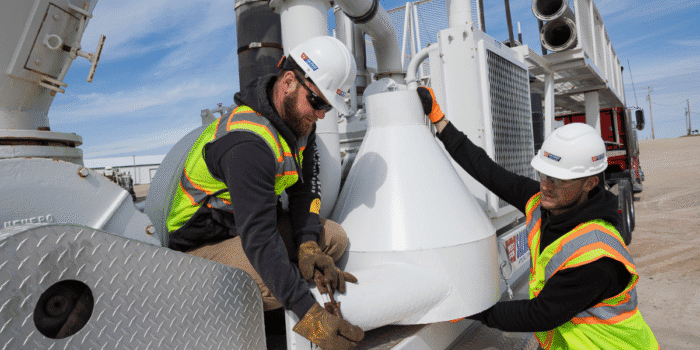
At West Side Salvage, high-volume grain vacuums are a core part of how we clean, unclog, and empty bins and silos nationwide.
Every team member is Confined Space Certified and trained on the equipment industrial work demands, including grain vacuums and bin whips.
Regular silo inspection helps catch buildup before it becomes a blockage.
Frequently Asked Questions
What is grain bin cleaning?
Removing leftover, caked, spoiled, or out-of-condition grain from a bin or silo. Crews use a grain vacuum to lift grain out through a hose without anyone entering the bin.
How does a grain vacuum clean out a bin?
A blower draws grain and air up a hose. In a cyclone tank, the grain falls out of the air stream, and a rotary airlock meters it out under pressure into a truck or bin.
How often should grain bins be cleaned?
Between crops or storage cycles, and any time grain has caked, spoiled, or stopped flowing. Regular cleaning prevents buildup that blocks flow and raises fire risk.
Can a grain vacuum remove spoiled grain?
Yes. Grain vacuums handle crusted, caked, or spoiled grain and blockages like bridging and ratholing, without a worker entering the bin.
Why hire a professional instead of doing it yourself?
Entering a bin to break up a clog is one of the deadliest tasks in agriculture. A professional crew clears it with a vacuum from outside, removing the need for unsafe entry.
Conclusion
The riskiest moment in grain handling is often the one that feels routine: stepping into a bin to break up a clog or scoop out spoiled grain.
A grain vacuum removes that risk by removing the grain from the outside, whether the job is a routine cleanout or large-scale disaster recovery.
At West Side Salvage, we have spent decades helping facilities across the U.S. clean, unclog, and recover grain safely.
Want your bins or silos cleaned out without putting anyone in harm’s way? Contact us to schedule a cleaning or request a quote.