A grain elevator explosion happens in a fraction of a second, often from a spark no one saw. The good news for operators: they are among the most preventable disasters in agriculture. The causes are well understood, the ignition sources are known, and the safety practices that stop them are straightforward. This guide walks through what causes these explosions, how to prevent them, and how to keep your facility and your people safe. Start with a quick check of your own operation.
Not sure where your facility stands? Take the 2 minute risk test.
West Side Salvage · Facility Tool
Grain Elevator Explosion Risk Check
0 of 7 answered
How safe is your facility right now?
Answer 7 quick questions and get a weighted risk score out of 100, plus a prioritized list of what to fix first. Takes about two minutes.
0
RISK / 100
Not started
Answer the questions to see your score
Each factor is weighted by how strongly it drives explosion risk. Dust housekeeping and ignition control carry the most weight.
Your priority fixes
Get a professional risk assessment
West Side Salvage inspects, cleans, and helps you build an explosion prevention plan.
This is an educational self-check, not a compliance audit.It does not assess, certify, or guarantee compliance with OSHA, NFPA, or any other safety standard or regulation. Scoring is directional and based on WSS field experience. For a formal evaluation of your facility, contact a qualified safety professional.
What Is a Grain Elevator Explosion?
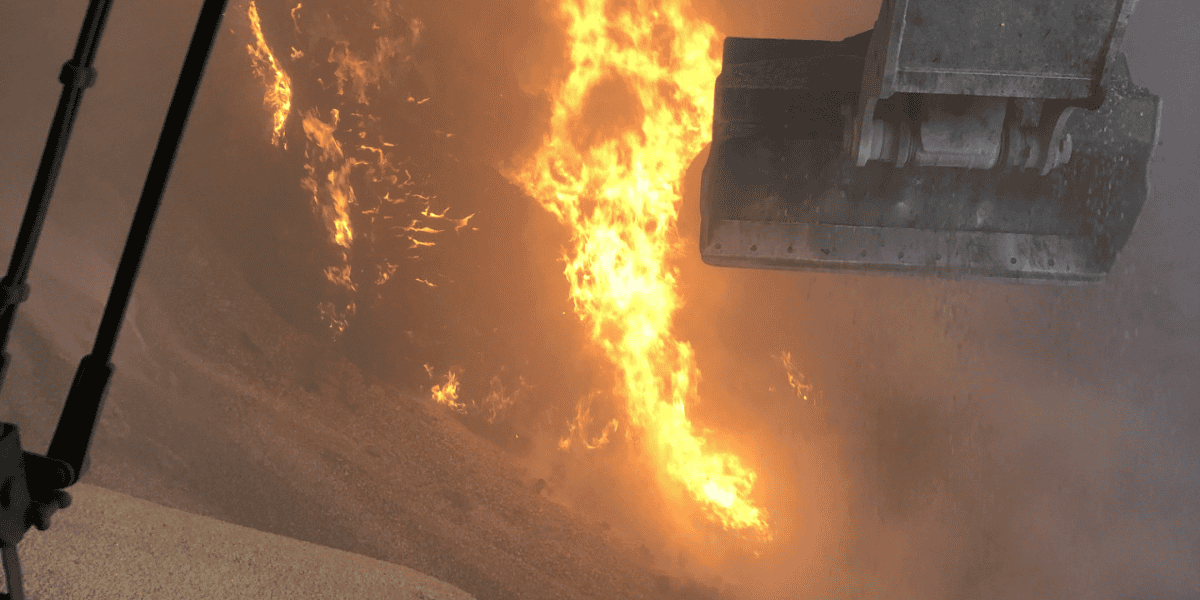
The rapid combustion of suspended grain dust inside an enclosed structure (silo, bin, bucket elevator, or headhouse). A dust cloud meets an ignition source in a confined space and burns almost instantly, producing a pressure wave strong enough to rupture steel and concrete.
How it differs from a grain fire:
Fire: smolders and spreads over minutes or hours.
Explosion: over in a fraction of a second, often triggering larger blasts.
Takeaway: The fuel is a byproduct of normal grain handling, which is exactly why safety practices matter so much.
What Causes Grain Elevator Explosions?
The dust is almost always present. What varies is the ignition source. In Purdue’s summary of the nine U.S. explosions in 2024, the known ignition sources broke down as:
Overheated equipment: misaligned belts, failing bearings, jammed legs
Hot work: welding, cutting, grinding
Smoldering grain: wet or spoiled grain that ferments and heats
Static and electrical faults: ungrounded equipment, worn wiring
Takeaway: The dust is a constant, so the cause is almost always the ignition source. Overheated equipment, hot work, and smoldering grain account for most explosions where a cause is found. Every one is preventable.
The Five Ingredients: The Dust Explosion Pentagon
Fire needs three things. A dust explosion needs five. Remove any one and it cannot happen, which is the foundation of every prevention strategy. Engineers call this the dust explosion pentagon.
Element
What It Is
Can you control it?
Fuel
Fine grain dust
Yes
Dispersion
Dust suspended in a cloud
Yes
Ignition
Spark, flame, hot surface
Yes
Oxygen
Present in the air
No
Confinement
Enclosed silo or bin
No
Takeaway: You cannot remove oxygen or confinement from a working elevator, so prevention comes down to controlling fuel, dispersion, and ignition.
How to Prevent a Grain Elevator Explosion
Prevention means attacking the three controllable elements: fuel, dispersion, and ignition. The risk check above scores your facility against these. Here is what each safeguard looks like.
Control the Dust
Written housekeeping program targeting elevators, grinders, and dryers
Keep accumulation below NFPA thresholds (a visible layer is too much)
Clean beams, ledges, and rafters, not just floors
Never blow down dust with compressed air
Eliminate Ignition Sources
Hot work permits for all welding, cutting, and grinding Inspect belts and bearings for misalignment and overheating
Add bearing temperature and belt alignment sensors
Ground all equipment; keep wiring in good repair
Control the Grain
Store at safe moisture to prevent the smoldering behind most silo fires
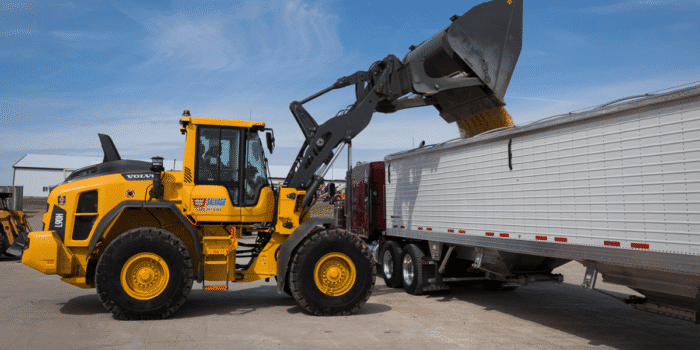
Regular professional silo and bin cleaning is one of the most effective ways to keep dust below dangerous levels.
Pentagon Element
Can you control it?
Primary Safeguard
Fuel (dust)
Yes
Housekeeping and professional bin cleaning
Dispersion
Yes
Dust collection, avoid blow-downs
Ignition
Yes
Hot work permits, equipment monitoring, grounding
Oxygen
No
Inherent to any facility
Confinement
No
Managed with explosion venting
Takeaway: Housekeeping is not busywork. It is the core of explosion prevention.
Why Housekeeping Is Your Best Safeguard
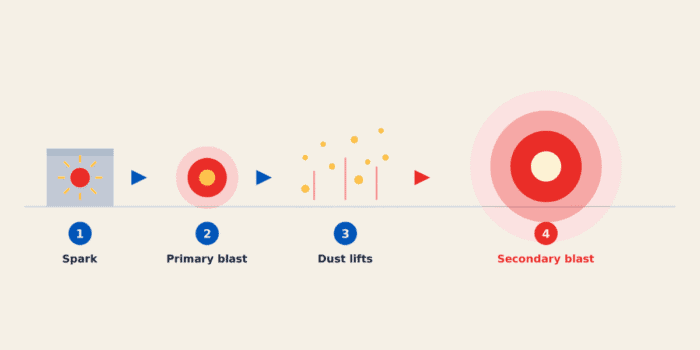
The most damaging incidents are usually not one explosion but two, and dust housekeeping is what breaks the chain. Here is the sequence, and why secondary explosions cause the most damage.
Ignition inside equipment, often a bucket elevator leg
Primary blast: destructive but contained
Dust lifts: the shockwave shakes loose years of settled dust
Secondary blast: the airborne cloud ignites, spreads facility-wide
Takeaway: Settled dust is stored fuel. A clean facility has little fuel for a second blast, which is why housekeeping is the single most effective safety practice you can invest in.
Explosions by the Numbers
9 explosions in the U.S. in 2024, matching 2023
8.6 per year: the 10-year average, nearly flat for a decade
9 states affected in 2024, across feed mills, elevators, ethanol, and corn processing
20+ per year before the 1988 OSHA standard, with 62 deaths in a single 1977-78 cluster
Takeaway: Regulation got the industry most of the way there. Facility-level discipline closes the gap.
Building a Facility Safety Plan
Prevention works best as a standing program, not a one-time effort. A strong grain handling safety plan includes:
A written housekeeping schedule with assigned responsibility
Routine equipment inspection and monitoring
A hot work permit process
Worker training on dust hazards and early warning signs
A current, drilled emergency action plan
A trusted response partner identified in advance
Keeping these current is what separates a facility that stays safe year after year from one that relies on luck. If an incident ever does occur, having the plan and the right contact ready at 844-465-0183 means professional response is one call away.
Takeaway: Safety is a program, not a poster. The facilities that avoid incidents are the ones that treat prevention as an ongoing routine.
FAQs
What causes most grain elevator explosions?
An ignition source meeting a cloud of combustible grain dust in a confined space. The most common sources are overheated equipment, hot work like welding and cutting, and smoldering grain.
Can grain dust really explode?
Yes. Suspended as an airborne cloud in an enclosed structure, a single spark can ignite it almost instantly, and confinement lets pressure build fast enough to rupture steel and concrete.
What is a secondary explosion?
When a first, smaller blast shakes settled dust into the air and ignites it, producing a much larger explosion that spreads facility-wide. Secondary blasts cause most deaths and structural damage.
How do you prevent a grain elevator explosion?
Focus on fuel, dispersion, and ignition: dust housekeeping and bin cleaning, dust collection, hot work permits, equipment monitoring, grounding, and safe grain storage.
How often do grain elevator explosions happen?
Purdue records roughly nine per year in the U.S., a 10-year average near 8.6. The rate has stayed flat over the past decade.
What should I do immediately after an explosion?
Get everyone clear, call 911, shut down fans and conveyors, and stay out of the structure. Then call West Side Salvage 24/7 at 844-246-2234.
Conclusion
Grain elevator explosions are fast, violent, and almost always preventable. Control the dust, manage ignition, store grain properly, and train your people, and you remove the conditions an explosion needs. Treat prevention as an ongoing safety program rather than a one-time fix, and you protect both your people and your operation.
West Side Salvage has spent five decades helping facilities prevent grain fires and explosions, keep their operations safe, and recover quickly when incidents occur, and is a preferred partner for insurers nationwide.